Latest Updates
Self-Study vs Academy Training – Which Is Better? 15 OLQs SSB me Psychology Test kaise hota hai NDA Age Limit Explained (5 Important Rules) NDA vs CDS: 7 Major Differences – Best for Defence Aspirants 5 Tips to Crack SSB : SSB Interview Guide GSPI Nashik Exam 2026 – Proven Strategy for Selection Process & Success NDA Admission Open 2026

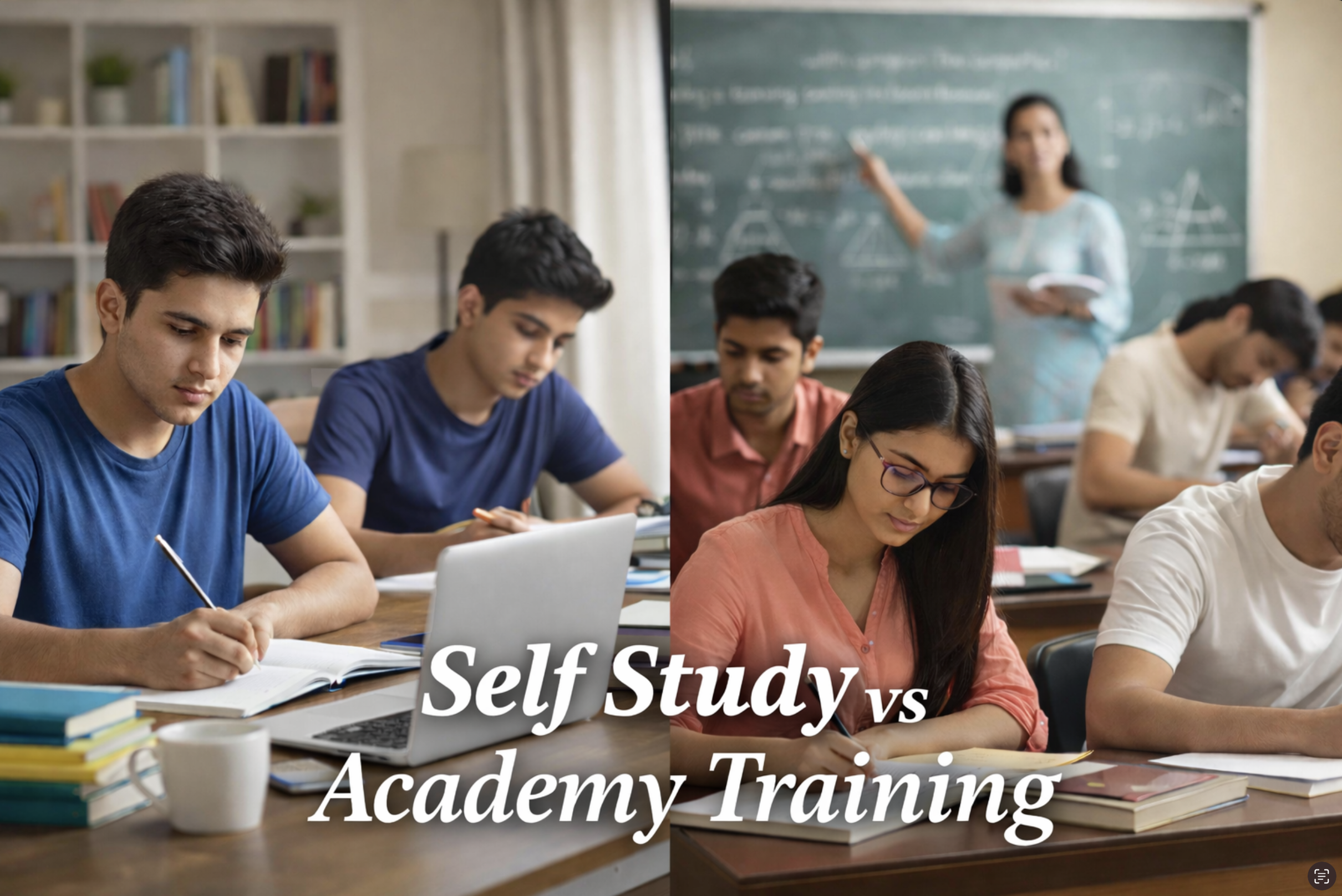
Self-Study vs Academy Training – Which Is Better?

Self-Study vs Academy Training – Which Is Better?

Self Study vs Academy Training is one of the most common questions faced by students preparing for competitive exams. Every aspirant wants to know which method is more effective for success. While some students prefer studying independently, others rely on structured academy training. Understanding the difference between self study and academy training helps students choose the right preparation strategy based on their learning style, discipline, and goals.

Self Study vs Academy Training :In today’s competitive world, students preparing for entrance exams, government jobs,
or professional courses often face one important question – should they depend on
self-study or join an academy for training? Both methods are popular and effective,
but the right choice depends on the student’s mindset, discipline, and learning needs.
Understanding the difference between self-study and academy training can help students
make a smarter decision for their future.

Self Study vs Academy Training -What Is Self-Study?

Self Study vs Academy Training : Self-study means learning independently without formal classroom teaching.
Students create their own study schedule, select their study material,
and monitor their own progress. With the availability of online lectures,
e-books, test series, and free educational platforms, self-study has become
more practical than ever.

One of the biggest strengths of self-study is flexibility. Students can study
at their own pace and focus more on weak areas. It is also cost-effective, as
there are no coaching fees involved. Self-study helps build self-discipline,
confidence, and decision-making skills.

However, self-study also has limitations. Lack of guidance, delayed doubt-solving,
and absence of accountability can slow down progress. Without a proper plan,
students may feel confused or demotivated.

Self Study vs Academy Training – What Is Academy Training?

Academy training involves structured learning under experienced teachers.
Students follow a fixed timetable, attend regular lectures, give tests,
and receive continuous guidance. Coaching academies are designed to provide
exam-oriented preparation with proper planning.

The biggest advantage of academy training is expert guidance. Teachers simplify
complex topics and share practical strategies. Regular tests and feedback help
students identify strengths and weaknesses. A competitive classroom environment
keeps students motivated and disciplined.

On the downside, academy training can be expensive and less flexible.
The teaching pace may not suit everyone, and some students become overly
dependent on teachers instead of developing independent thinking.

Self-Study vs Academy Training: Comparison

Aspect Self-Study Academy Training
Cost Low High
Flexibility Very High Limited
Guidance Minimal Expert
Discipline Self-driven Structured
Peer Competition No Yes

Which One Should You Choose?

Self Study vs Academy Training : There is no single best method for everyone. Self-study is ideal for students
who are disciplined, motivated, and confident in planning their preparation.
Academy training is better for beginners or students who need guidance,
monitoring, and motivation.

For most aspirants, the best approach is a combination of both – academy
training for direction and expert guidance, and self-study for revision,
practice, and self-improvement.

Which Method Works Best for Competitive Exams?

Competitive exams demand conceptual clarity, regular practice, and mental discipline. Students who choose self-study must ensure they follow a proper timetable, revise regularly, and practice mock tests. On the other hand, academy training provides a structured roadmap, experienced mentors, and peer competition, which helps maintain consistency.

Many successful candidates follow a hybrid approach. They join an academy to understand concepts and exam patterns, while self-study helps them revise topics, practice questions, and improve speed and accuracy. This combination allows students to stay guided while developing independent problem-solving skills.

Ultimately, success depends on consistency, dedication, and smart planning rather than the method alone. Whether a student chooses self-study or academy training, focused effort and discipline remain the key factors for achieving goals.

Conclusion

Self-study vs Academy Training are not enemies; they complement each other.
Success depends not on the method but on consistency, discipline, and hard work.
Choose the approach that suits your learning style and stay committed to your goal.
With the right strategy and dedication, success is achievable through any path.
 

15 OLQs

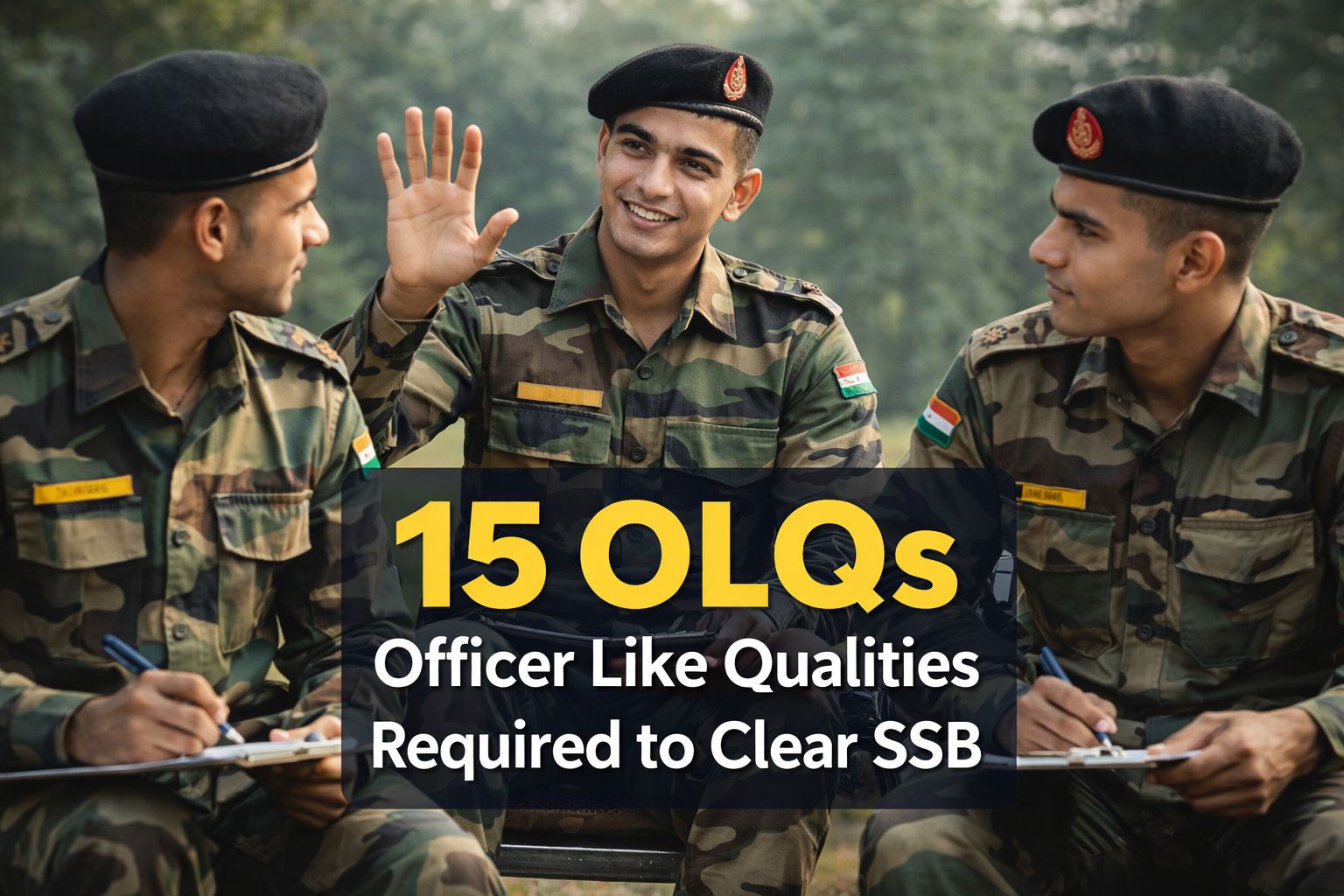
15 OLQs Explained: Officer Like Qualities Required to Clear SSB

15 OLQs are the foundation of the SSB interview process and play a decisive role
in the selection of future officers in the Indian Armed Forces.The Services Selection Board (SSB) interview does not judge candidates on marks,
degrees, or fluent English. Instead, it evaluates a candidate’s personality based
on a specific set of traits known as the Officer Like Qualities (OLQs). These
qualities indicate whether a candidate has the potential to become an effective
leader in the Indian Armed Forces.

The 15 OLQs are divided into four major factors: Planning & Organising,
Social Adjustment, Social Effectiveness, and Dynamic Factors. Understanding these
qualities clearly is the first step toward successful SSB preparation.

What are Officer Like Qualities (OLQs)?

Officer Like Qualities are the psychological and behavioural traits expected in
a defence officer. SSB assessors observe these qualities consistently during
psychological tests, GTO tasks, and the personal interview.

SSB does not look for perfection. It looks for natural behaviour that reflects
leadership potential, responsibility, and mental balance.

Group 1: Planning & Organising

1. Effective Intelligence

The ability to understand situations quickly and take logical decisions using
available resources.

2. Reasoning Ability

The capability to analyse problems logically and arrive at practical solutions.

3. Organising Ability

The skill to plan tasks, manage time, and utilise resources efficiently.

Group 2: Social Adjustment

4. Social Adaptability

The ability to adjust comfortably in different social environments and work with
diverse individuals.

5. Cooperation

Willingness to work as a team member and contribute to group success.

6. Sense of Responsibility

The habit of taking ownership of tasks and being accountable for actions.

Group 3: Social Effectiveness

7. Initiative

The readiness to take action without waiting for instructions.

8. Self-Confidence

Belief in one’s abilities while remaining humble and receptive.

9. Speed of Decision

The ability to make timely and appropriate decisions under pressure.

10. Ability to Influence the Group

The capacity to guide, motivate, and positively influence others.

11. Liveliness

Mental alertness, enthusiasm, and energy during tasks and interactions.

Group 4: Dynamic Factors

12. Determination

Persistence and commitment to complete tasks despite difficulties.

13. Courage

Mental strength to face fear, pressure, and challenging situations.

14. Stamina

Physical and mental endurance to perform consistently for long durations.

15. Integrity

Honesty, moral values, and consistency in words and actions.

How SSB Assesses the 15 OLQs

SSB does not test OLQs through direct questions. Instead, these qualities are
observed indirectly during TAT, WAT, SRT, GTO tasks, group discussions, and
interviews. Consistency across all tests is the key factor.

For example, leadership shown in group tasks should align with responses in
psychological tests and answers during the interview.

Can OLQs Be Developed?

Yes, OLQs are not inborn traits. They can be developed through disciplined living,
self-awareness, physical fitness, participation in group activities, and honest
self-improvement.

Trying to fake OLQs leads to rejection. Developing them naturally leads to
selection.

The 15 OLQs form the backbone of the SSB selection system. Candidates who focus on
personality development rather than shortcuts significantly increase their
chances of success. Understand the OLQs, live them daily, and SSB selection will
become a natural outcome.

The 15 OLQs are not checked in isolation during the SSB interview. Assessors look
for a consistent display of these qualities across all testing techniques,
including psychology tests, GTO tasks, and personal interview.

A candidate may show good performance in one test, but inconsistency in behaviour
across different situations often leads to rejection. This is why understanding
and developing the 15 OLQs holistically is extremely important.

The 15 OLQs reflect how a candidate thinks, behaves, interacts with others, and
handles pressure. These qualities are essential for leading troops, making quick
decisions, and maintaining discipline in challenging environments.

Candidates should focus on real-life application of OLQs such as taking
responsibility, working in teams, staying physically active, and maintaining
mental balance. Gradual improvement in daily life naturally reflects during the
SSB interview.

Instead of trying to display artificial confidence, aspirants should aim to live
the 15 OLQs consistently. SSB selection is a result of personality development,
not shortcuts.


SSB me Psychology Test kaise hota hai

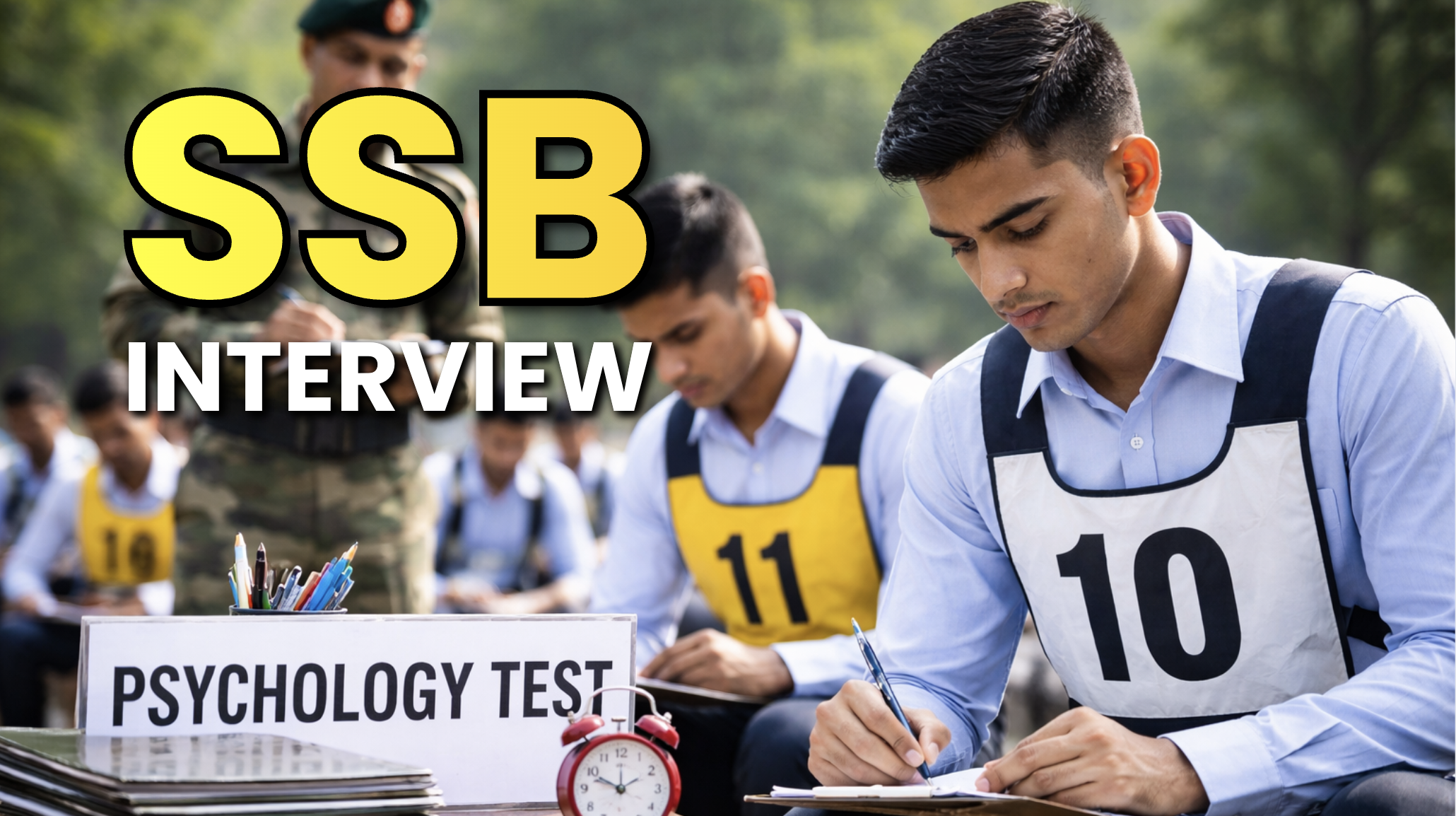
SSB me Psychology Test kaise hota hai? (Complete Guide in Hindi)

SSB me psychology test kaise hota hai yeh sawal har defence aspirant ke mann me
hota hai jo SSB interview ki taiyari kar raha hota hai.

SSB interview me Psychology Test ek bahut hi important stage hota hai. Bahut saare
candidates is test se darte hain, kyunki unhe lagta hai ki yeh test bahut tough
hota hai ya isme right–wrong answers hote hain. Lekin sach yeh hai ki Psychology
Test aapke dimaag ya knowledge ko nahi, balki aapki soch aur personality ko
samajhne ke liye hota hai.

Is blog me hum detail me samjhenge ki SSB me psychology test kaise hota hai, isme
kaun-kaun se tests hote hain, aur in tests ko kaise approach karna chahiye. Answer Milega : SSB mein psychology test kaise hota hai?

SSB me psychology test kaise hota hai aur iska purpose kya hota hai?

Psychology Test ka main purpose hota hai candidate ke subconscious mind ko
samajhna. Is test ke through assessors yeh dekhte hain ki aap pressure me kaise
sochte ho, problems ko kaise handle karte ho, aur kya aapme Officer Like Qualities
(OLQs) present hain ya nahi.

Is test me aapko sochne ka zyada time nahi milta, isliye jo response aata hai wahi
aapki natural personality ko reflect karta hai.

SSB me Psychology Test kaise hota hai?

SSB Psychology Test me kaun-kaun se tests hote hain?

SSB me Psychology Test mainly chaar parts me divide hota hai:

  • Thematic Apperception Test (TAT)
  • Word Association Test (WAT)
  • Situation Reaction Test (SRT)
  • Self Description Test (SD)

1. Thematic Apperception Test (TAT)

TAT me aapko kuch pictures dikhayi jaati hain. Har picture par aapko ek chhoti si
story likhni hoti hai. Is story me aapko batana hota hai ki picture me kya situation
hai, character kya soch raha hai, aur us situation ka outcome kya hoga.

Yeh test aapki imagination, problem-solving ability aur positive attitude ko
check karta hai. Story hamesha realistic aur practical honi chahiye.

2. Word Association Test (WAT)

WAT me aapko ek-ek karke words dikhaye jaate hain. Har word ke liye aapko turant
ek sentence likhna hota hai. Is test me time bahut kam hota hai, isliye sochne ka
mauka nahi milta.

Yeh test aapki natural thinking, attitude aur emotional balance ko judge karta
hai. Sentence hamesha positive aur action-oriented hona chahiye.

3. Situation Reaction Test (SRT)

SRT me aapko daily life se judi situations di jaati hain. Har situation par aapko
batana hota hai ki aap us condition me kya action loge.

Is test me yeh dekha jaata hai ki aap problems ko kaise handle karte ho, kya aap
responsibility lete ho, aur kya aap practical solutions soch paate ho ya nahi.

4. Self Description Test (SD)

Self Description Test me aapko apne baare me likhna hota hai – jaise parents kya
sochte hain, teachers kya sochte hain, friends kya sochte hain, aur aap khud
apne baare me kya sochte ho.

Is test me honesty sabse important hoti hai. Artificial ya fake answers easily
pakde jaate hain.

Psychology Test me koi bhi “perfect answer” nahi hota. Natural, honest aur
consistent responses hi selection ka base bante hain.

Psychology Test ke dauran common mistakes

  • Memorized answers likhna
  • Unrealistic hero banne ki koshish karna
  • Negative ya extreme reactions dena
  • Time management ka dhyaan na rakhna

Psychology Test me kaise prepare karein?

Psychology Test ki preparation ka best tareeka hai apni daily life ko disciplined
banana. Reading, physical activity, decision-making aur self-awareness par focus
karna bahut zaroori hai.

Practice ke liye mock tests helpful ho sakte hain, lekin answers ratta maarna
bilkul avoid karein.

SSB me psychology test aapko judge nahi karta, balki samajhne ki koshish karta hai.
Agar aap apni personality par kaam karte ho aur honest approach rakhte ho, to yeh
test aapke liye opportunity ban sakta hai, problem nahi.

SSB me psychology test kaise hota hai samajhne ke baad sabse important baat hoti
hai apni preparation strategy. Is test me success paane ke liye candidate ko apni
daily life me discipline, honesty aur responsibility develop karni chahiye.

Bahut se candidates sirf coaching ke answers ratne ki koshish karte hain, lekin
psychology test me ratta bilkul kaam nahi karta. Psychologist aapke likhe hue
answers se aapki soch, maturity aur decision-making ability ko judge karta hai.

Psychology test ke dauran time pressure hota hai, isliye regular practice zaroori
hai. Lekin practice ka matlab yeh nahi ki same answers likhe jaayein. Har response
natural aur situation ke according hona chahiye.

Sabse badi baat yeh hai ki SSB me psychology test aapko darane ke liye nahi, balki
samajhne ke liye hota hai. Agar aap apni personality ko improve karte hain aur
honest rehte hain, to yeh test aapke liye ek strong plus point ban sakta hai.

SSB mein psychology test kaise hota hai?


NDA Age Limit Explained (5 Important Rules)

NDA Age Limit Explained (5 Important Rules)

NDA age limit is one of the most important eligibility criteria for candidates
aspiring to join the National Defence Academy. Every year, many students get
disqualified not because of preparation, but due to misunderstanding of the age
limit rules. Therefore, it is extremely important to clearly understand the NDA
age limit as per the latest notification.

In this blog, we explain the NDA age limit in simple language, including minimum
and maximum age, latest rules, age calculation method, and common mistakes
students must avoid.

Table of Contents

  • What is NDA?
  • NDA Age Limit – Latest Rules
  • NDA Age Limit Table
  • How to Calculate NDA Age
  • Is Age Relaxation Allowed in NDA?
  • Common Mistakes Related to NDA Age
  • Final Advice for NDA Aspirants

What is NDA?

The National Defence Academy (NDA) is the premier joint training academy of the
Indian Armed Forces. Candidates selected through NDA are trained together before
joining the Army, Navy, or Air Force as commissioned officers.

Since NDA selects candidates at a young age, strict age criteria are followed by
UPSC.

NDA Age Limit – Latest Rules

As per the latest UPSC NDA notification, candidates must fall within a specific
age range on the date specified in the official notice. The age limit is fixed
and non-negotiable.

Generally, candidates must be between 16.5 to 19.5 years of age at
the time of commencement of the course.

NDA Age Limit Table

Criteria Age Limit
Minimum Age 16.5 Years
Maximum Age 19.5 Years
Age Relaxation Not Applicable

How to Calculate NDA Age

To calculate NDA age, candidates must check their date of birth as mentioned in
the Class 10 certificate. UPSC considers only this date of birth for eligibility.

For example, if the NDA notification specifies that candidates must be born
between certain dates, even being one day older or younger can lead to
disqualification.

Always verify your date of birth carefully before filling the NDA application
form. No correction is allowed later.

Is Age Relaxation Allowed in NDA?

No age relaxation is allowed in the NDA examination for any category. Whether the
candidate belongs to General, OBC, SC, ST, or any other category, the age limit
remains the same for everyone.

This is because NDA is a training-based entry at a young age, and uniformity is
maintained in age standards.

Common Mistakes Related to NDA Age

  • Assuming age relaxation is available
  • Calculating age incorrectly
  • Ignoring the official date range in notification
  • Mismatch in date of birth across certificates

Final Advice for NDA Aspirants

Before starting NDA preparation, always confirm your eligibility, especially the
age limit. If you are eligible, plan your preparation with discipline and proper
guidance. If not, explore other defence entries like CDS or AFCAT.

Understanding the NDA age limit correctly can save you from unnecessary rejection.
Stay informed, follow the latest rules, and prepare smartly for a successful NDA
journey.

NDA age limit related doubts are very common among students preparing after
Class 10 or 12. Many aspirants remain confused about eligibility due to rumours,
social media posts, or incorrect guidance. Therefore, it is important to clear
these doubts with accurate information.

One of the most frequently asked questions is whether a candidate can apply for
NDA in the same year they turn 16 or 20. As per rules, candidates must strictly
fall within the age range mentioned in the official notification. Even if a
candidate becomes eligible or ineligible by a single day, UPSC does not allow any
exception.

Another common doubt is related to multiple attempts. NDA age limit indirectly
controls the number of attempts. Since the age window is small, candidates usually
get only limited chances. Hence, serious preparation should begin as early as
possible, ideally from Class 9 or 10.

Many students also ask whether appearing in Class 12 affects NDA eligibility.
Candidates who are appearing in Class 12 can apply for NDA, provided they meet
the age limit criteria and fulfil subject requirements at the time of admission.

Parents often enquire whether future notifications may change the NDA age limit.
Although rules can be updated by UPSC, aspirants should always rely only on the
latest official notification and not on assumptions or previous trends.

Understanding the NDA age limit in detail helps candidates plan their studies,
physical training, and attempts properly. Early clarity reduces stress and allows
focused preparation for both the written exam and SSB interview.

NDA vs CDS: 7 Major Differences – Best for Defence Aspirants


NDA vs CDS: Which Defence Entry is Better for You?

NDA vs CDS is one of the most common questions among defence aspirants in India.
Both examinations are prestigious entry routes to join the Indian Armed Forces,
yet they differ significantly in terms of eligibility, age, training, and career
path. Choosing the right defence entry at the right time is crucial for a
successful military career.

This blog provides a complete and clear comparison of NDA vs CDS to help
aspirants understand which exam suits their age, qualification, and long-term
goals.

What is NDA?

The National Defence Academy (NDA) examination is conducted for candidates who
wish to join the Indian Armed Forces immediately after completing their 12th
standard. NDA offers entry into the Army, Navy, and Air Force at a very young age,
allowing candidates to be trained from the foundation level.

Candidates selected through NDA undergo a three-year training program at the
National Defence Academy, followed by specialized training at respective
academies. NDA builds leadership, discipline, and officer-like qualities from an
early stage.

What is CDS?

The Combined Defence Services (CDS) examination is conducted for graduates who
aspire to join the Indian Army, Navy, or Air Force as commissioned officers. CDS
is suitable for candidates who decide to join the defence forces after completing
their graduation.

CDS candidates receive comparatively shorter training, as they are older and
already graduates. This entry is ideal for those who develop interest in defence
services during college or after graduation.

NDA vs CDS: Eligibility Criteria

  • NDA: Candidates must have passed 10+2. For Army, any stream is allowed; for Navy and Air Force, Physics and Mathematics are mandatory.
  • CDS: Candidates must be graduates. Engineering degree is required for Navy and Air Force entries.

NDA is meant for school-going aspirants, while CDS is for mature candidates with
higher educational qualifications.

Age Limit: NDA vs CDS

  • NDA: Age limit generally ranges between 16.5 to 19.5 years.
  • CDS: Age limit usually ranges from 19 to 25 years, depending on the academy.

NDA gives candidates an early start in defence life, whereas CDS allows candidates
to join after experiencing college life.

Exam Pattern Comparison

The NDA written examination consists of Mathematics and General Ability Test,
covering subjects like English, General Knowledge, Physics, Chemistry, History,
and Geography. The difficulty level is based on 10+2 standard.

The CDS written examination includes English, General Knowledge, and Elementary
Mathematics. The syllabus is broader and more analytical, suited for graduates.

Training Duration and Lifestyle

NDA cadets undergo nearly five years of combined training, including NDA and
respective academy training. This long training period helps in deep personality
development and leadership grooming.

CDS cadets undergo around one to one-and-a-half years of training, as they are
already graduates and older in age.

Salary and Career Growth

Both NDA vs CDS officers receive the same salary once commissioned, as pay is
based on rank and not on entry type. Career growth, promotions, and benefits are
equal for officers from both entries.

The difference lies only in the starting age and training exposure, not in
service benefits or respect.

“NDA is about starting early, while CDS is about joining with maturity. Both lead
to the same proud uniform.”

Which is Better: NDA vs CDS?

There is no absolute answer to which is better. NDA is ideal for candidates who
are determined to join defence forces at a young age and are ready for long-term
training. CDS is best for those who discover their passion later or wish to
complete graduation first.

The right choice depends on age, educational background, and personal readiness
for defence life.

NDA vs CDS are both honorable gateways to serve the nation. What matters most is
your dedication, discipline, and commitment to becoming a responsible officer in
the Indian Armed Forces.


5 Tips to Crack SSB : SSB Interview Guide


NDA SSB INTERVIEW GUIDE: 5 Tips to Crack SSB

How to crack NDA SSB ? 5 Tips to Crack SSB in 1st Attempt | The NDA SSB Interview is not merely a selection test; it is a complete and
scientific evaluation of a candidate’s personality, mindset, and leadership
potential. Conducted by the Services Selection Board, this interview aims to
identify young individuals who can be trained into responsible officers of the
Indian Army, Navy, and Air Force.

Every year, lakhs of aspirants appear for the NDA written examination, but only a
small percentage manage to clear the SSB interview. The main reason behind this
gap is the lack of understanding of what SSB actually looks for. Unlike
conventional exams, SSB does not judge you on marks or memorized answers; it
judges your natural behavior, consistency, and officer-like qualities.

How to Crack NDA SSB? Understanding the NDA SSB Interview Process

The NDA SSB interview process generally spans over five days. Each day focuses on
a different aspect of your personality. From the very first day, candidates are
observed continuously, both inside and outside the testing areas.

  • Day 1 – Screening: OIR test and PPDT to assess reasoning ability and expression.
  • Day 2 – Psychology Tests: TAT, WAT, SRT, and Self Description.
  • Day 3 & 4 – GTO Tasks: Group discussions, outdoor obstacles, command task, lecturette.
  • Day 5 – Conference: Final assessment by the board.

Each test is designed to evaluate officer-like qualities such as leadership,
decision-making, social adaptability, courage, cooperation, and emotional
stability.

Tip 1: Focus on Developing Officer Like Qualities (OLQs)

Many candidates mistakenly believe that SSB selection depends on confidence,
English fluency, or physical strength alone. In reality, SSB focuses on Officer
Like Qualities. These qualities include discipline, sense of responsibility,
initiative, teamwork, integrity, and a positive outlook towards life.

Instead of trying to act like someone else, work on improving your daily habits.
Take responsibility at home, participate in group activities, maintain a
routine, and develop problem-solving skills. Natural and consistent behavior
always stands out in SSB.

Tip 2: Psychological Tests Reflect Your Thinking Pattern

Psychological tests form the foundation of the SSB interview. These tests aim to
understand your subconscious thoughts and how you respond to real-life
situations. There are no right or wrong answers, but there are suitable and
unsuitable approaches.

Your responses should reflect optimism, practicality, and initiative. Avoid
extreme reactions, unrealistic heroism, or negative thinking. Practice helps,
but memorization can be harmful. Be spontaneous yet sensible in your responses.

Tip 3: Group Tasks Demand Cooperation, Not Aggression

During GTO tasks, assessors carefully observe how you interact within a group.
Leadership in SSB does not mean dominating others or speaking loudly. True
leadership is about listening, coordinating, and motivating the team.

Give clear and logical suggestions, support others’ ideas, and encourage silent
group members. Even if your idea is rejected, stay positive and cooperative. Such
behavior reflects maturity and emotional balance.

Tip 4: Personal Interview Tests Your Honesty and Awareness

The personal interview is more of a friendly discussion than a strict
interrogation. The interviewing officer wants to understand your background,
education, interests, family environment, and motivation to join the armed
forces.

Be honest while answering questions. If you have weaknesses, acknowledge them
and explain the steps you are taking to improve. Awareness about current affairs
and clarity about your goals create a strong impression.

Tip 5: Discipline, Routine, and Physical Fitness Are Essential

How to Crack NDA SSB ? SSB is a demanding process that tests both mental and physical endurance. A
disciplined lifestyle, regular exercise, and time management play a crucial
role in maintaining confidence throughout the five days.

Reading newspapers, improving communication skills, and staying physically fit
reflect seriousness and self-discipline. These qualities are fundamental for a
future officer.

“SSB is not about impressing the assessors. It is about expressing your true
personality with confidence and responsibility.”

How to Crack NDA SSB ? Common Mistakes Candidates Should Avoid

  • Trying to memorize stories or answers
  • Faking confidence or leadership traits
  • Showing negativity or frustration
  • Inconsistency in thoughts and actions

How to Crack NDA SSB ? Assessors observe candidates throughout the day, even outside the testing
sessions. Therefore, maintaining consistency in behavior is extremely important.

Preparing for the NDA SSB interview is a journey of self-improvement. When you
focus on developing officer-like qualities and maintain honesty in your
approach, selection becomes a natural outcome rather than a forced effort.


GSPI Nashik Exam 2026 – Proven Strategy for Selection Process & Success


GSPI Nashik Exam 2026 – Proven Strategy for Selection Process & Success

GSPI Nashik Exam , Are you preparing for GSPI Nashik 2026? Whether you are a first-time aspirant or already enrolled in coaching,
understanding the GSPI selection process, exam stages, and the right preparation strategy is essential for success.

This detailed guide by Success Academy Nashik explains everything you need to know about GSPI Nashik 2026,
including physical tests, written examination, interview process, and final merit selection.

What is GSPI Nashik?

GSPI (General State Police Inspector) is a prestigious state-level recruitment conducted for the post of
Police Inspector in Maharashtra Police.

GSPI Nashik refers to the recruitment process for candidates applying from the Nashik region under the
Maharashtra Police Recruitment Board. The selection process is designed to choose physically fit, mentally strong,
and knowledgeable officers.

GSPI Nashik 2026 Selection Process

The GSPI Nashik selection process consists of six important stages. Every candidate must clear each stage to move forward.

1. Physical Standards Test (PST)

The Physical Standards Test is the first qualifying stage in GSPI Nashik 2026. Candidates are checked for minimum physical
requirements as per government norms.

  • Height measurement
  • Chest measurement for male candidates
  • Body proportion standards

Candidates who do not meet the required physical standards are disqualified at this stage.

2. Physical Efficiency Test (PET)

The Physical Efficiency Test evaluates the candidate’s stamina, speed, and overall fitness. Performance in PET plays
an important role in the final merit.

  • Short and long-distance running
  • Long jump or high jump
  • Strength-based activities as per notification

Regular physical training is strongly recommended by Success Academy Nashik to score well in PET.

3. Written Examination

The written examination is a crucial stage in the GSPI Nashik selection process. It tests the candidate’s academic
knowledge and awareness.

Expected Exam Pattern:

  • Objective type (MCQs)
  • Marathi and English medium
  • Negative marking may apply

GSPI Written Exam Syllabus:

  • General Knowledge and Current Affairs
  • Maharashtra History and Geography
  • Indian Polity and Constitution
  • Logical Reasoning and Numerical Ability
  • Basic Law and Police Administration

Solving previous year question papers and mock tests designed for GSPI Nashik helps improve accuracy
and time management.

4. Interview and Personality Test

Candidates who qualify the written examination are called for an interview. This stage focuses on personality traits
required for a Police Inspector.

  • Communication skills
  • Decision-making ability
  • Confidence and leadership qualities
  • Awareness of social and national issues

5. Medical Examination

After clearing the interview, candidates must undergo a medical examination to confirm fitness for active police duties.

  • Vision and hearing tests
  • Cardiovascular health check
  • General physical examination

6. Final Merit List

The final merit list for GSPI Nashik 2026 is prepared based on combined performance in all stages.

  • Written examination marks
  • Physical test performance
  • Interview score
  • Medical fitness clearance

GSPI Nashik 2026 Preparation Tips | GSPI Nashik Exam

Aspirants preparing with Success Academy Nashik are advised to follow a disciplined and balanced approach.

  • Start physical training early to build stamina
  • Create a structured daily study timetable
  • Practice GSPI-specific mock tests regularly
  • Stay updated with Maharashtra current affairs
  • Strengthen Marathi and English language basics

GSPI Nashik Exam 2026 Important Dates

The official dates will be announced in the GSPI notification. Expected timelines are given below.

  • Notification release before examinations
  • PST and PET within 4 to 6 weeks of notification
  • Written examination after physical qualification
  • Interview and medical examination in final stage

Why Prepare GSPI Nashik with Success Academy Nashik?

Nashik is one of the most important regions in Maharashtra for police administration. Getting selected as a Police
Inspector in Nashik offers a respectable career with long-term growth & Successful Career.

Success Academy Nashik provides expert guidance, structured training, and exam-focused preparation
for GSPI Nashik Exam aspirants.

Conclusion

The GSPI Nashik 2026 selection process is competitive, but with consistent effort, proper guidance,
and disciplined preparation, success is achievable.

Start your preparation early with Success Academy Nashik, stay focused, and move one step closer to
your dream of becoming a Police Inspector in Maharashtra.

NDA Admission Open 2026

NDA Admission Open 2026 – Best NDA Academy in Maharashtra

NDA EXAM | THE SUCCESS ACADEMY NASHIK (TSA) is now accepting admissions for
NDA 2026. If you dream of becoming an officer in the
Indian Army, Indian Navy, or Indian Air Force, your journey begins here.

Recognized as the Best NDA Academy in Maharashtra, TSA offers complete
NDA written exam coaching, SSB interview training, and physical preparation
under one roof.

Join the Best NDA Class in Nashik – THE SUCCESS ACADEMY (TSA)

THE SUCCESS ACADEMY NASHIK provides disciplined, result-oriented training for
Class 10, 11, 12 & NDA repeat aspirants. Our academy focuses not only on
clearing NDA exams but on developing future defence officers.

📍 Location: Old Pandit Colony, Nashik, Maharashtra
📞 Call Now: 7887883570

Why THE SUCCESS ACADEMY is the Best NDA Academy in Maharashtra

✅ Expert Defence Faculty

Training is conducted by retired Army, Navy, and Air Force officers who bring
real defence experience into NDA preparation.

✅ Experienced Leadership

The academy is led by Director Gulab Deore Sir, known for his discipline-focused
and officer-oriented training approach.

✅ Complete NDA + SSB Preparation

From NDA written exam coaching to SSB interview preparation,
TSA covers academics, physical fitness, personality development, and leadership skills.

SSB Interview Guidance by Colonel Sampath Gopalan Sir

Specialized SSB coaching includes:

  • Psychology Tests (TAT, WAT, SRT, SD)
  • GTO Tasks & Group Activities
  • Personal Interview Training
  • Officer Like Qualities (OLQs) Development

✅ Daily Physical Training

Physical fitness sessions include PT, endurance drills, obstacle training, and sports
as per defence standards.

✅ Proven Results

TSA has achieved a success rate of over 80% in recent NDA and SSB selections,
making it one of the top NDA coaching institutes in Maharashtra.

NDA Courses Offered at THE SUCCESS ACADEMY Nashik

Our NDA coaching programs are designed for beginners as well as repeat candidates.

  • NDA Written Exam Coaching (Mathematics & GAT)
  • SSB Interview Training (Psychology, GTO & Interview)
  • Personality Development & Leadership Training
  • Physical Training & Ground Activities
  • Regular Mock Tests & Performance Analysis
  • Hostel & Nutritious Food Facility

This complete ecosystem makes TSA the Best NDA Training Institute in Maharashtra.

Faculty & Study Material

Our faculty team includes:

  • Retired Defence Officers
  • NDA Exam Subject Specialists
  • SSB Interview Experts

Students receive:

  • Updated printed study material
  • Topic-wise practice papers
  • Weekly NDA mock tests
  • One-to-one mentoring sessions
  • Exam strategy & revision classes

Physical & Personality Development Training

At THE SUCCESS ACADEMY, physical fitness and personality grooming are mandatory.

  • Daily morning PT & drills
  • Obstacle training & sports activities
  • Confidence & communication sessions
  • Leadership, discipline & time-management training

This all-round development prepares students for NDA EXAM , SSB, and a successful defence career.

Infrastructure & Facilities

  • Smart classrooms
  • NDA-focused library
  • Large PT & sports ground
  • Hostel with hygienic meals
  • Motivational sessions by defence officers

NDA Admission Process 2026

  1. Visit THE SUCCESS ACADEMY NASHIK or contact us
  2. Fill the admission form
  3. Attend counselling & aptitude guidance
  4. Submit documents & confirm admission

🎯 Limited seats available – admissions on first-come basis

Contact for NDA Admission 2026

📍 Address: Old Pandit Colony, Nashik, Maharashtra
📞 Call / WhatsApp: 7887883570
👨‍✈️ Director: Gulab Deore Sir
🎖️ SSB Guidance: Colonel Sampath Gopalan Sir

Start Your Defence Career Today

Joining the Best NDA Academy in Maharashtra is your first step toward
wearing the uniform with pride.

👉 Enroll now at THE SUCCESS ACADEMY NASHIK (TSA)
Train with discipline. Lead with confidence. Serve the nation 🇮🇳

📞 Call Now: 7887883570

NDA Career Opportunities After Training

After completing training through the National Defence Academy, candidates
get the opportunity to join the Indian Army, Indian Navy, or Indian Air Force
as commissioned officers. The NDA EXAM pathway builds strong leadership qualities,
discipline, and a sense of responsibility among cadets.

Proper guidance during preparation plays a crucial role in clearing both the
NDA written examination and the SSB interview. With the right mentoring,
aspirants can understand defence life, officer responsibilities, and long-term
career growth within the armed forces.

Institutes like Success Academy Nashik focus on academic excellence along with
physical fitness and personality development, ensuring that students are fully
prepared to face the challenges of NDA Exam selection and training.